


Table of Contents
To put it simply, attendees go to your event for one of two reasons. One, for the content, or, two, to meet and interact with other attendees who share similar interests.
Now when it comes to virtual events, the first reason is covered extremely well. Attendees get all of the same information, knowledge, and education that they would from any other event, just this time it’s from the comfort of their homes.
As for the second reason, providing a place for attendees to meet and interact with each other without any face-to-face interaction, this is the hardest part of an event to digitalise. So how do you do it?
Well, we get asked this question a lot and more specifically, we get asked about the possibility of doing virtual meetings and online networking.
These are two very different ways for attendees to meet and interact with each other. This article aims to clear up any confusion and help you decide what will work best at your virtual events.
First things first, here are the definitions:
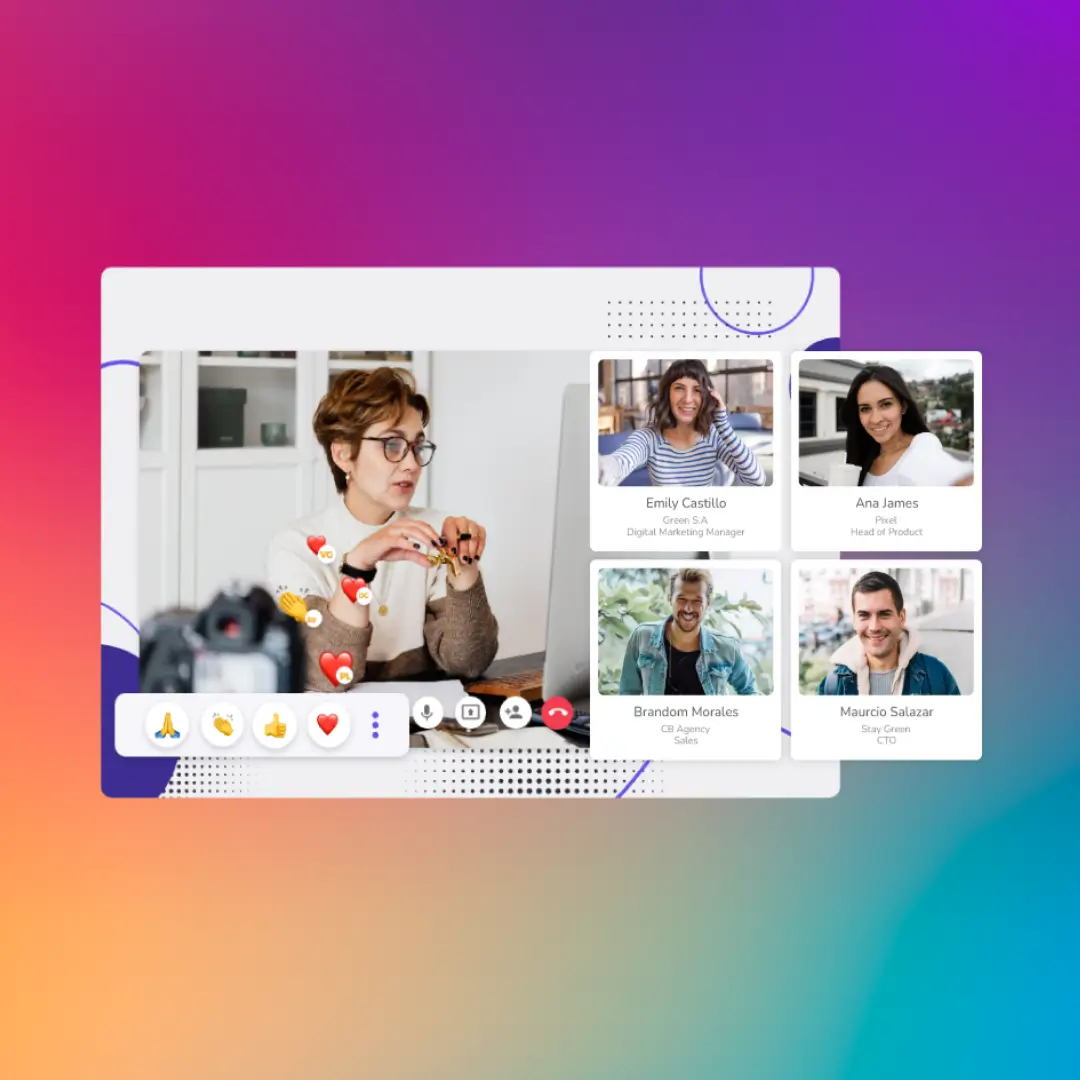
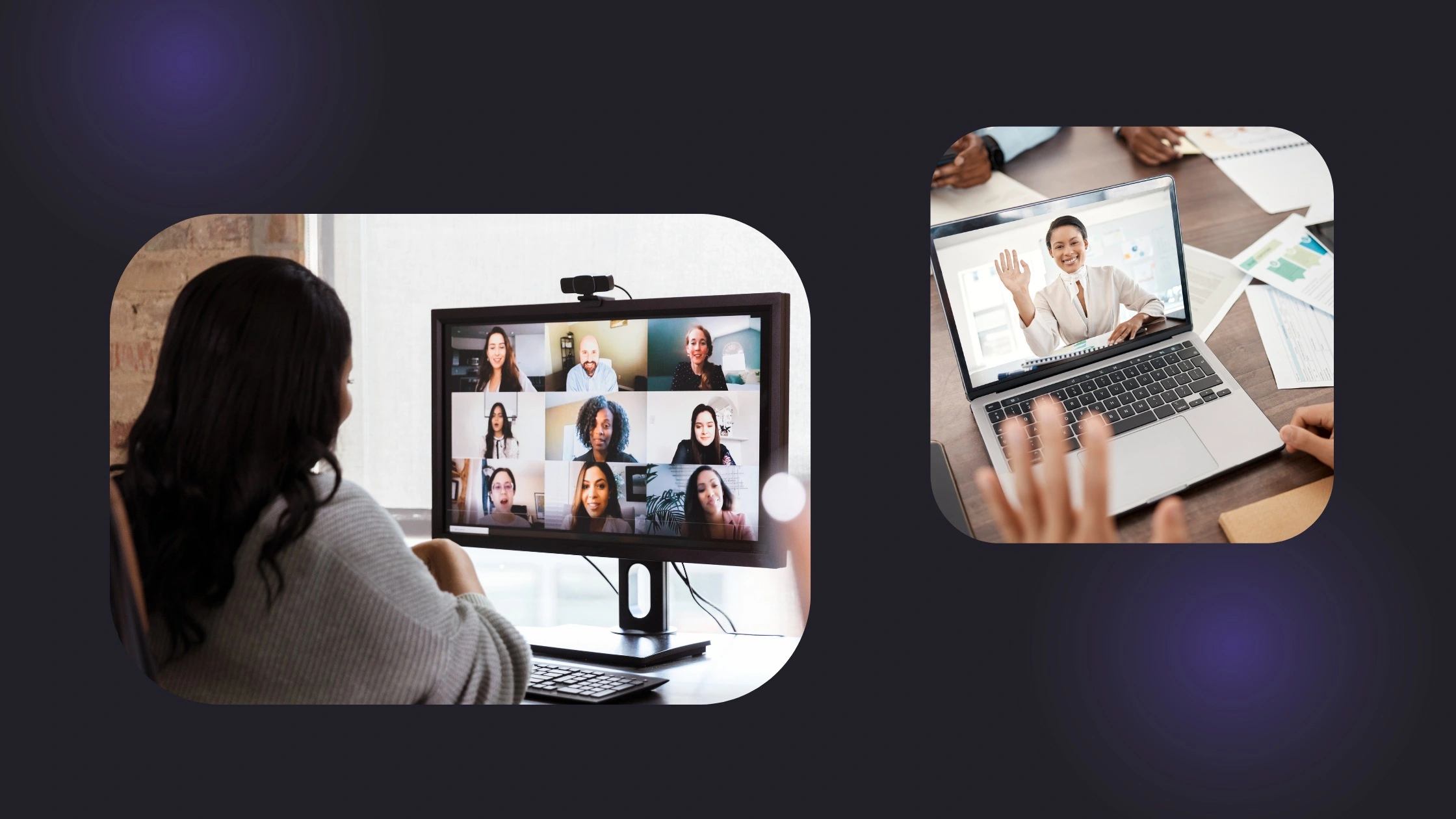
Virtual meetings: This is where people from any given location use video, text, and audio to interact at the same time. These are hosted on platforms such as Skype, Zoom, and Google Hangouts. Put simply, a virtual meeting is a meeting done online without a physical location. Some attendees or businesses will use a virtual phone number on a virtual phone service (VoIP) and then connect them to Slack to initiate a video call.
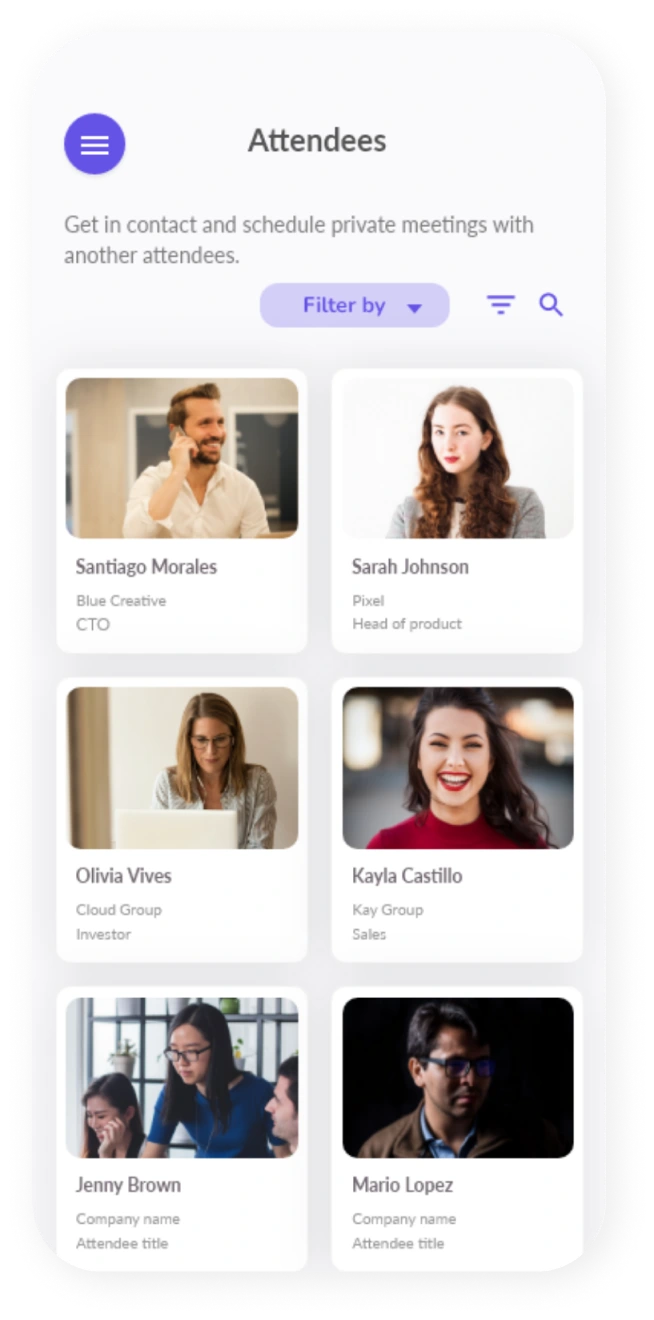
Online networking: This allows attendees to engage in real-time chats and discussions along with virtual meeting rooms and breakout sessions. Here, the focus is about creating better and closer connections amongst attendees. This means putting attendees in front of the people they want to know.
OK, so we’ve got a good understanding of what they both are, now to take this a step further, it’s time to dive into the main characteristics of online networking.
To attend you need to meet the criteria
Online networking is about creating opportunities for attendees to meet with others who share similar interests. By doing so, participants can get the most out of their meeting and have peace of mind that they’ll be participating in a high-quality meeting that is going to be beneficial for all parties involved.
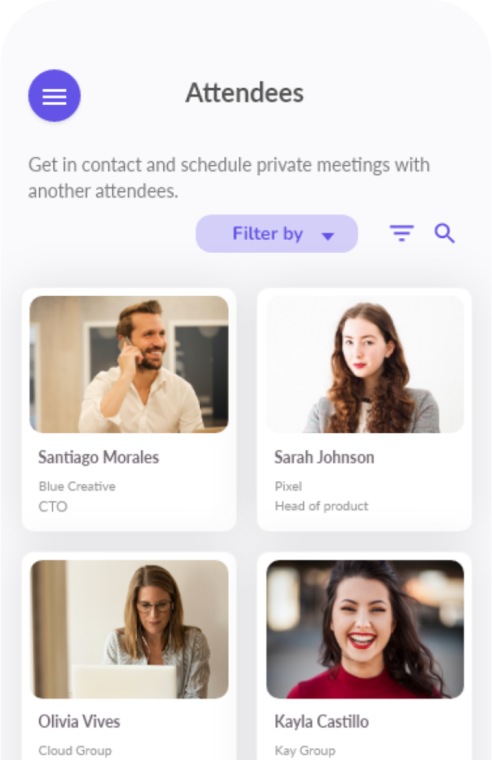
The quality of these appointments depends on the profile of your attendees. Networking profiles enable you to distinguish between two or more types of attendees of a networking session seeking to meet with other attendees. This makes it possible to differentiate between different attendees such as buyers and sellers or participants and speakers, ensuring that only those who are interesting in meeting do so. Now, compare this to a virtual meeting which is always going to be broader in scope and you quickly start to see why online networking is valued so highly by attendees.
It happens during an online event
Where as a virtual meeting has only one purpose, networking is one of the many components that form an online event. When you add this to the agenda with keynotes, breakout sessions, and other sessions you create a more complete attendee experience.
Going beyond this, networking also provides the opportunity for attendees to personalize their event and dive into what's most important to them. Having engaging content is always going to be valuable to any event. But that’s ignoring the point that attendees are always itching to meet and interact with each other. This aspect holds true even for events hosted by a web design company, as the chance to meet fellow attendees who may have expertise in web design or related fields can be particularly enticing.
Although it can be hard to replicate online, attendees still want to be part of a community. By providing networking at your virtual event, not only are you able to offer this (a major selling point for any virtual event) but you also give attendees a real return on their investment.
It ensures a connection between demand and supply
Although online networking will need to be prescheduled, it ensures that those that the right attendees are meeting with each other. As mentioned, this is done with networking profiles which are filled out by attendees before the event.
This streamlines the meeting process and ensures that no attendees are wasting their time speaking to the wrong people. This is quite the opposite to virtual meetings which are always based around a general topic which can never appeal to everyone or offer the chance for participants to meet and interact with each other (the very reason why virtual meetings are considered to be dull and unengaging).
It comes as a sequence of multiple one-on-one meetings during a specific timeline
The final aspect that we need to mention is that online networking is composed of multiple meetings or sessions within a specific timeline. Normally this is leveraged into the agenda of the as a breakout session to provide some variety away from all of the other content.
Importantly, having networking in this format allows attendees to focus on their meetings without any distractions. It’s likely your attendees will have spent a lot of time preparing for this prior to the event. And it’s also important to note, that this is the greatest opportunity for attendees to meet and interact. Understandably then, this will be a big deal, so be sure that the networking lives up to their expectations.
Discover how Eventtia helps world-leading brands digitize and scale their events.